Vernal Pools, Phlox Subulata, and Other Spring Magic
Some things are meant for spring enjoyment, and that is all. And that is enough.
I just visited a vernal pool—a body of water, probably no more than three-feet deep, left behind after the snow and ice of winter melted. Unlike a long-standing pond, this body of water is free from most predators, as they haven’t had time to take residence in it. (They don’t really know it is there in enough time to move in.) With this safety feature, the vernal pool becomes a veritable maternity ward for frogs, salamanders, and other amphibians.
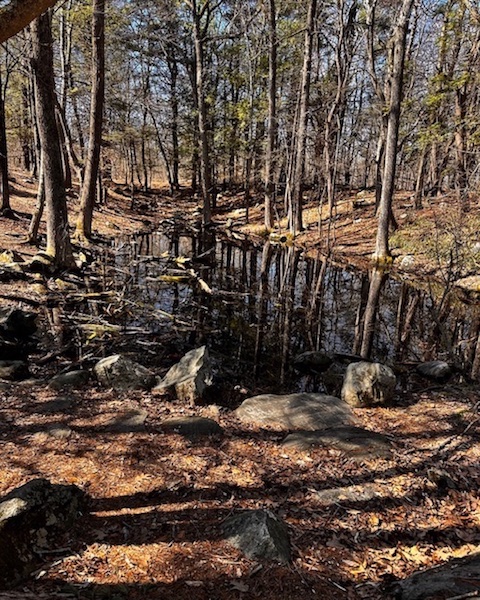
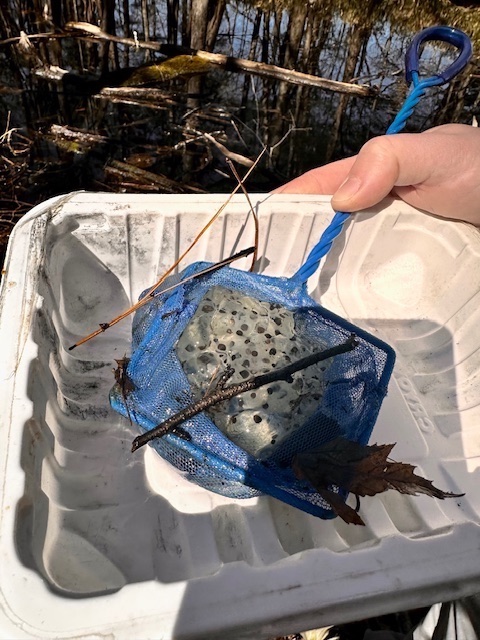
In the shallow vernal pool I visited, wood frog egg masses were abundant—the eggs, jelly-like orbs with dark centers, one stage in bringing forth life. Such wonder in this spring sight, and such a peaceful and still body of water… it might be nice to have it last and last beyond spring. But once the frogs and salamanders have entered into the world and gone their ways, the vernal pool generally dries up. This pool is a sight that does not last much beyond springtime. But it is a wondrous sight.
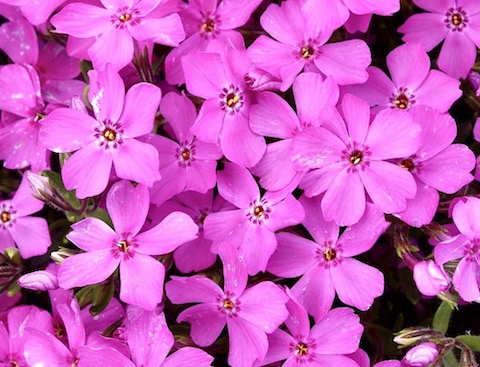
Seems odd to compare that to a plant, but visiting that vernal pool caused me to think of Phlox subulata, or Creeping Phlox. I cannot say enough about the way this low-growing ground cover carpets an entire area with colorful, star-like blooms. The carpet is bright and visible, as Phlox subulata has a very dense covering of flowers. But the blooms do not last far into summer. They are a spring sight, and a beautiful sight at that.
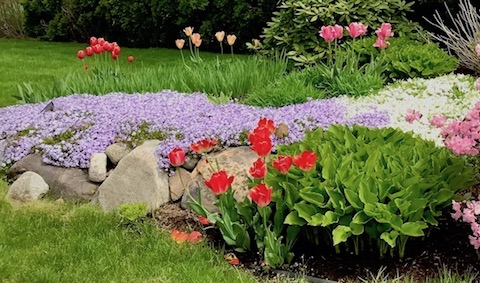
I insist that I can coax out a second flush of blooms on Phlox subulata by shearing it immediately after the first carpeting blooms have gone by. But my insistence is just wishful thinking. The second bloom time is always less impressive… fewer flowers dot the ground cover, for sure. It is the spring carpet that captures attention.
Would I want Phlox subulata to bloom continuously throughout spring and summer? Yes. But would it have the same charm as it does now, with bloom time spanning a few weeks in spring? Likely, no. Each year, I know that my Phlox subulata, resident below an area of Tulips and Daffodils (other spring sights), will take my breath away when it first opens up with color. It will keep me happy for days, for weeks…. But it will not maintain its flower coverage far into summer. Nevertheless, what it offers in spring is so beautiful… truly, that is enough.
When the vernal pool dries up, different habitats appear, ready to support other creatures. Its spring duty is over, and it becomes ready to serve new purposes. And when Phlox subulata stops blooming and its color-sharing duty has ended, it assumes the duty of keeping weeds down with the help of its woody stems and matting greenery… greenery that is too dense to allow pesky weeds to poke through. The look of its muted green foliage is far subtler than the color that is part of the spring flower show that Phlox subulata offers, but it covers ground and works well as an underpinning for summer flowers that will spring up nearby.
If you’re thinking about getting some Phlox subulata and creating a flower carpet of your own, don’t start counting the weeks that remain in spring. You’ll have time to enjoy the blooms. And don’t worry about the fact that you are not purchasing a continuous bloomer. Think instead of what this low-growing, spreading ground cover offers as a spring sight, and know that the sight is so magical, it is just enough.
Comments
{{ errors.first("comment") }}