"Righter" Than Right: Planting Asclepias
What wrong do gardeners do? Not much, in my estimation. Their unending quest to add color and often fragrance to the world… nothing wrong with that. Their desire to put fresh fruit and veg on the table… nothing wrong there either. They do so much right. But what’s “righter” than right: Planting Asclepias tuberosa to serve as nutrition and a nursery of sorts to monarch butterflies, creatures which might otherwise disappear completely.
Host Plant for Monarchs
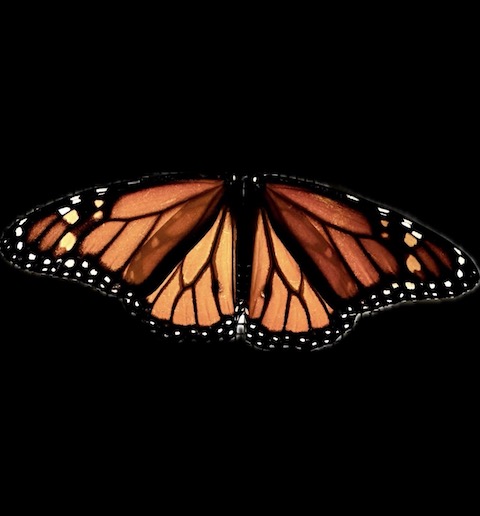
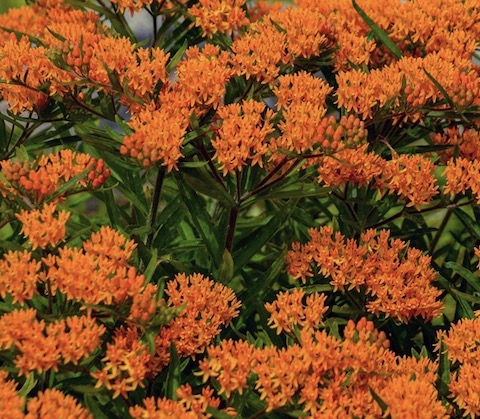
All butterflies have a host plant, and Asclepias is host to the gorgeous orange, black, and white monarchs. There are many varieties of Asclepias to choose from, including the familiar dusty pink Swamp Milkweed (Asclepias incarnata). However, the bright orange, truly monarch-colored variety, Asclepias tuberosa, is my go-to choice for ensuring monarchs have what they need.
Monarchs lay their eggs on Asclepias tuberosa, beneath the thin green blades of foliage which look good all spring, summer, and fall. Not all the eggs make it to the next stage. In fact, most don’t. But those strong eggs which develop into larvae, or caterpillars—bulbous guys in striped suits of black, yellow, and white—fill up on Asclepias, ingesting what is actually toxic to birds and other caterpillar predators. This gives them long-lasting protection against being eaten before they can complete their life cycle. (That’s “one” for Asclepias. Chalk up one point for helping the monarch along its life’s path.)
When the caterpillars are ready to enter into the pupal stage, they typically leave their host plants to build their chrysalises elsewhere. They choose spots that are truly protected, under strong branches or the like. Then… true magic. We know what happens next.
One of the Pollinator Plants
Once entering the beautiful butterfly stage, monarchs see Asclepias as just one of many plants with appealing and life-sustaining nectar. But certainly the bright orange Asclepias tuberosa draws in the winged beauties as they gather nourishment and prepare for later journeys and efforts to propagate the species. (Chalk up another point for Asclepias.)
The journeys in question are the annual migrations that monarchs make, clocking mileage that seems impossible for creatures so small and delicate. But journey they do, with the help of gardeners who do the right thing and plant, plant, and plant some more, adding to the nectar that will sustain these creatures before they begin their travels.
Now, as mentioned, any good pollinator plant will draw in monarchs and help keep them going. Creating a pollinator garden is a great first step in helping the monarchs. But monarchs need Ascelpias specifically, as it is their host plant, when it comes time to lay their eggs. Asclepias tuberosa plants, with water-saving taproots, are low-maintenance garden additions that truly help, supplying both food and habitat.
Native or Not?
Asclepias incarnata and Asclepias tuberosa are native plants, with their native region spanning much of the migratory path that the monarchs must make each year. No problem there, right…? But land-clearing/urbanization means that the meadows in which Asclepias grew naturally are fewer and farther between. Fewer places to grow… a real problem. And what is worse, most recently, some tropical Asclepias (Asclepias curassavica) has come onto the market. Despite more of a mix of colors (red and orange), it looks very similar to the orange-flowering native. Unfortunately, it is not good for monarchs. Because this non-native variety stays in bloom for longer than its native cousins do, it can trick the monarchs into staying too long, failing to catch their flights on time. It can also wreak havoc in other ways. Finding the native variety is key to being a helping gardener.
To find bright and beautiful orange-flowering Asclepias tuberosa, native in zones 3–9, go to a trusted grower. Know that your plant will thrive on good stretches of sunlight and will be considered an herbaceous perennial, dying back each year and then returning.
Once established, Ascelpias tuberosa is drought-tolerant and can handle lots of stressors. The blooms appear in the earliest part of summer and can be enjoyed by monarchs and humans alike for the full season. But again, when fading occurs, it occurs at the right time. Unlike non-native Asclepias varieties, Asclepias tuberosa bids the garden farewell at an appropriate time to signal to monarchs that they should start preparing for their next move. (Chalk up another point for Asclepias tuberosa.) Take flight.
"Righter" Than Right
In general, gardeners do little wrong. They might curse the aphids that have harmed some tender plant stems. They might get a little pushy as they compete for that last tray of petunias. But in general, gardeners do what’s right…. What is “righter” than right: Ensuring this world, especially along the migratory path of the monarch, is rich with Asclepias.
Comments
{{ errors.first("comment") }}