Planting an Elegant Tea Garden
I love a good cup of coffee. But tea can be so elegant. It seems to be a fine drink to enjoy in the garden, and in fact, garden bounty in the form of flower petals, fresh or dried herbs, and even berries can be added to tea leaves to accentuate or change the flavor of the drink.
Not only do flowers and herbs accentuate brews made with tea leaves, but many of those same flowers and herbs can be steeped on their own to produce hot drinks we would consider to be teas, or infusions made by pouring hot water over them and letting them sit to release flavor, color, and nutrients.
If you’re interested in setting up something a little different in your garden, perhaps preparing one small bed to use as a tea garden makes good sense. With a café table and chairs nearby, the picture would be complete… a nice place to treat yourself and host others.
Chamomile
Chamomile perhaps comes to mind first when thinking of flowering plants for the tea garden. We know that the small white flowers with sun-gold centers are pleasant to look at and have a comforting scent. The scent is often used in baby products, indicating its soothing nature. Chamomile tea is also known to soothe.
Chamomile can be used fresh or dried for making tea. Some tea aficionados say that steeping the fresh flowers produces a tea which is less bitter, and that seems to be a good reason to plant some Chamomile, so as to have it in its fresh form. But I have not yet grown Chamomile… maybe someday, but so far, I just haven’t tried. But Lavender makes a wonderful tea garden plant. I’m fond of Goodwin Creek Lavender, which is fine for culinary use.
Lavender
Whereas multiple Lavender plants would be needed for crafting purposes—for example, drying the blooms and making sachets—only one Lavender plant is needed in a tea garden. The flavor of Lavender is so pronounced that a little goes a long way. But steeping just a bit of fresh or dried Lavender along with black tea creates an absolute treat of a drink. For me, it must be sweetened, and it is the sort of drink that one sits down with on a summer morning in the garden, just before engaging in gardening work or going off to a busy job.
Set a teaspoon or just a bit more of fresh or dried Lavender inside a tea strainer or at the base of an 8-ounce cup of water. Use water that is not quite boiling, if you are steeping the Lavender alone. Or, what I would recommend: Steep the Lavender with black tea leaves, which taste best when steeped in water that has been brought to a boil. Do not stir it around and disturb it once the water hits the cup. Just let it sit for a few minutes. Strain, consider sweeteners and/or a creamer, and then enjoy.
Lavender can stand up to bold flavors, and that is why I recommend brewing it with black tea leaves. We can take our cue on this from the popular coffee chain (the one with the dark green signage and great popular following) where baristas offer coffee drinks with Lavender foam. Sweetened just a bit, the Lavender (in this case, in a sweetened syrup) has a noticeable presence in a powerful cup of coffee. This flavor pairing works equally well with powerful, straightforward black tea. In fact, Lavender takes that “straightforward” drink and turns it into something far more complex… a nice pick-me-up that has different dimensions and really is a taste sensation.
Stevia
For sweetening Lavender, I like to use honey. Honey obviously has garden roots, with bees benefiting from the help of good gardeners who ensure they have a great selection of plants to use in producing the stuff. But Stevia is a choice I should consider, as well. Stevia is a plant, as you know, and so it can be grown in the tea garden and used for much more than tea. But to use it for tea is incredibly simple. Stevia tastes sweet even when a green leaf is placed between the teeth, so it is a wonderful natural way to avoid sugar and sweet syrups while achieving a sweetening effect. In fact, although I do not reach for Stevia as a sweetener, when I have had pre-sweetened drinks made with it, I have found them much sweeter than those that use sugar. As with the Lavender, a little goes a long way.
Growing Stevia in the tea garden does not involve much work, and it will pair nicely with other plants you grow for this purpose. One note to remember is that fresh Stevia leaves must be steeped in hot water. Stevia is recommended by many for use in iced tea, but the tea must start out hot and then be cooled down, for Stevia will not release sweetness in cool water.
Roses
As already mentioned, coffee is my drink of choice. However, attending an elegant “afternoon tea” with hot drinks, finger sandwiches, and sweets is something I will never forget. It was for a retirement celebration for a true friend, and the tea theme was perfect for honoring her. At that event, white tea with the smallest sprinkling of dried and crushed rose petals was my drink for the afternoon, and it was heavenly. I added a bit of sugar and milk; then I tried it with neither. I loved it both ways. Its pale pink tones, courtesy of the petals, added to its appeal. That prompts me to think that planting Roses in the tea garden would be a very good choice, serving multiple purposes: good looks, wonderful fragrance, and memorable and delicious culinary uses.
Fragaria
While a cup of hot tea goes well with gently sweetened cakes and fresh berries, berries can also be used in the brewing process, or just after, as a sweetener themselves. Including Fragaria, or wild Strawberries, in a tea garden would make perfect sense. The Fragaria plant known as Strawberry Toscana is a non-stop fruiting plant that shows both flowers and fruit simultaneously and all summer long. Placing a few of the small berries from the Fragaria plant would enliven a cup of brewed white tea beautifully, adding a fragrant fruitiness, rosy color, and a bit of sweetness to the brew.
Mint
With Mint of all sorts in the mix (just don’t let the Mint overtake your garden bed, as it is very aggressive), with good sunshine to keep the Mint thriving, with the use of nothing but water (no chemical fertilizers) for growing, and with a little trial-and-error practice with blending and steeping the right mix of teas, a tea garden can become a warm, sweet, appealing spot on your property.
Nasturtiums
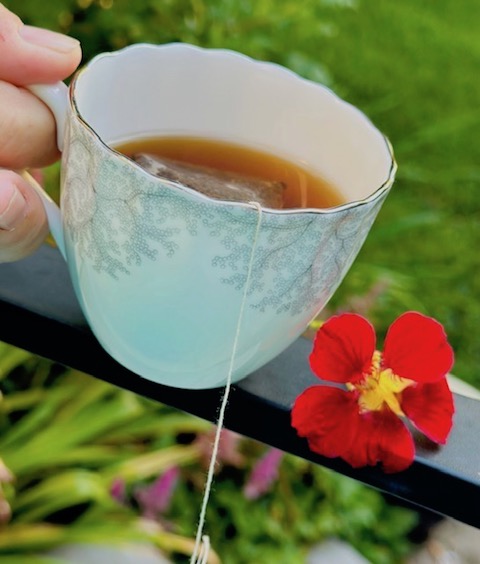
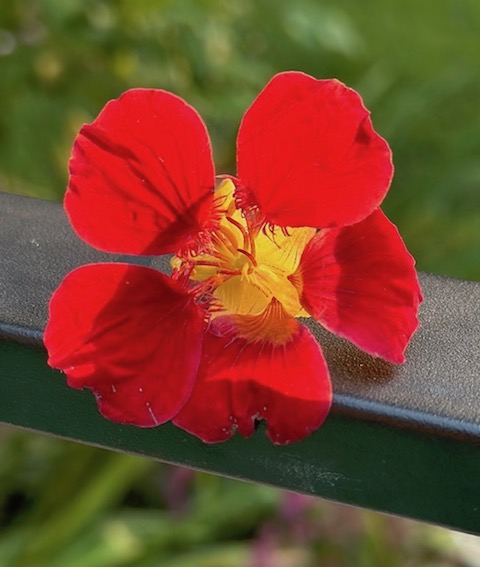
Nasturtium flowers make beautiful edible garnishes. But the flowers and leaves can also be brewed into a tea that has lots of Vitamin C. Test out a small brew first, just to know the flavor profile. Then decide how you want to mix and match the Nasturtium tea with Mint, Berries, and more.
Enjoyment
I can’t give up my coffee, but I can certainly add teas to the mix of hot drinks I enjoy. Enjoying them while relaxing within the tea garden would have special charm. (Remember to set up that café table and chairs.) I think we all deserve such a place, such an experience. And it's easy to create and maintain.
Comments
{{ errors.first("comment") }}